When the Algorithm Rejects: UK Employers and the Equality Act in the Age of AI Recruitment
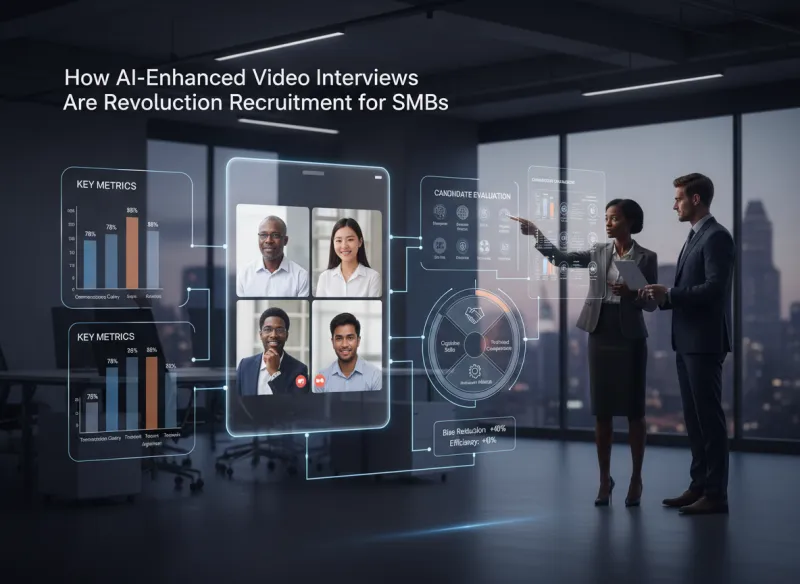
Photo: job applicant video interview laptop artificial intelligence recruitment, via applicantz.io
Recruitment technology has moved from the periphery to the centre of British hiring. CV parsing software, video interview analysis, and automated ranking systems now filter candidates long before a human reader forms an impression. For employers, the appeal is obvious: speed, scale and the promise of objectivity. The law, however, does not regard a machine as a neutral actor. Under the Equality Act 2010, liability for discriminatory decisions rests with the employer — regardless of whether the decision was made by a hiring manager, an outsourced agency, or an algorithm.
The Machine Is Not a Defence
A recurring misconception among employers is that outsourcing screening to software somehow transfers risk. It does not. Where an automated tool rejects an applicant because of a protected characteristic — age, sex, race, disability, pregnancy, religion, sexual orientation or gender reassignment — the employer is treated as having made that decision. There is no safe harbour in pointing at the vendor.
The mechanisms of algorithmic bias are well documented. A model trained on the CVs of a historically homogeneous workforce will learn to favour candidates who resemble that workforce. Keyword filters can penalise career gaps that disproportionately affect women returning from maternity leave. Speech analysis tools may disadvantage applicants with regional accents, speech impairments or neurological differences. None of these outcomes requires intent; the Equality Act is concerned with effects as much as motives.
Indirect Discrimination and the Data Problem
The most common exposure arises not from explicit rules but from facially neutral criteria that produce unequal outcomes. Indirect discrimination occurs when a provision, criterion or practice puts people sharing a protected characteristic at a particular disadvantage and cannot be justified as a proportionate means of achieving a legitimate aim.
Consider an automated system that penalises employment gaps exceeding six months. The rule says nothing about caring responsibilities, yet its practical effect falls heavily on those who have taken time out for family or for treatment of long-term health conditions. Unless the employer can demonstrate justification, a tribunal claim is difficult to resist. Crucially, an employer cannot simply assert that it did not know how the tool worked — ignorance of one's own processes is not a defence.
The Vendor Question
Procurement paperwork rarely answers the questions that matter. Before adopting a screening tool, employers should ask searching questions of suppliers: What data was the model trained on? Has bias auditing been carried out, and by whom? What protected characteristics, if any, does the system infer from names, postcodes, universities or photographs? Can the vendor explain why a specific candidate was rejected?
The last question is increasingly important. UK GDPR and the Data Protection Act 2018 give individuals the right not to be subject to solely automated decisions with significant effects, which includes rejection from a job. Where such decisions are made, candidates must be able to obtain human review. A system that cannot meaningfully explain its rankings leaves an employer unable to defend itself — and potentially in breach of data protection obligations alongside equality law.
Practical Steps Before the Pipeline Goes Live
Sensible employers treat algorithmic hiring as they would any other high-risk business process. A proportionate framework includes:
- Human oversight at decision points. Automated tools should shortlist, not select. A named person should review rejections, particularly at the final cut.
- Bias testing before and during use. Audit outcomes by protected characteristic where data permits, and repeat the exercise periodically.
- Contractual protections. Require vendors to warrant compliance with the Equality Act 2010, to disclose training data provenance, and to cooperate with audits.
- Documentation. Record how the tool works, what it measures and what justifications exist for its criteria. Tribunals look favourably on employers who can evidence considered decision-making.
- Training for hiring teams. Staff must understand that a ranked list produced by software is an input, not a verdict.
Reasonable Adjustments in a Digital Funnel
Disability discrimination deserves particular attention. Online application portals, timed assessments and video interviews can all create barriers. The duty to make reasonable adjustments applies from the moment a candidate enters the process, and it applies to the technology as much as the office. Offering alternative formats, extending timed tests, or allowing candidates to flag accessibility needs before automated scoring occurs are simple measures that materially reduce risk.
The Direction of Travel
Regulatory attention on automated decision-making is intensifying, and claimant solicitors are increasingly alert to algorithmic angles in discrimination claims. The technology will not slow down, and neither should employers — but adoption without governance is a false economy. The firms that benefit most from AI-assisted recruitment will be those that pair the efficiency of the machine with the judgement, oversight and accountability of a human being.
If your organisation uses or is considering automated recruitment tools, early advice on compliance, vendor contracts and audit design is invariably cheaper than defending a tribunal claim. Bentley Law advises employers across the spectrum of equality and employment risk, from policy design to dispute resolution.