The Key, the Deposit and the Photographs: Handling a Tenancy After a Tenant Dies
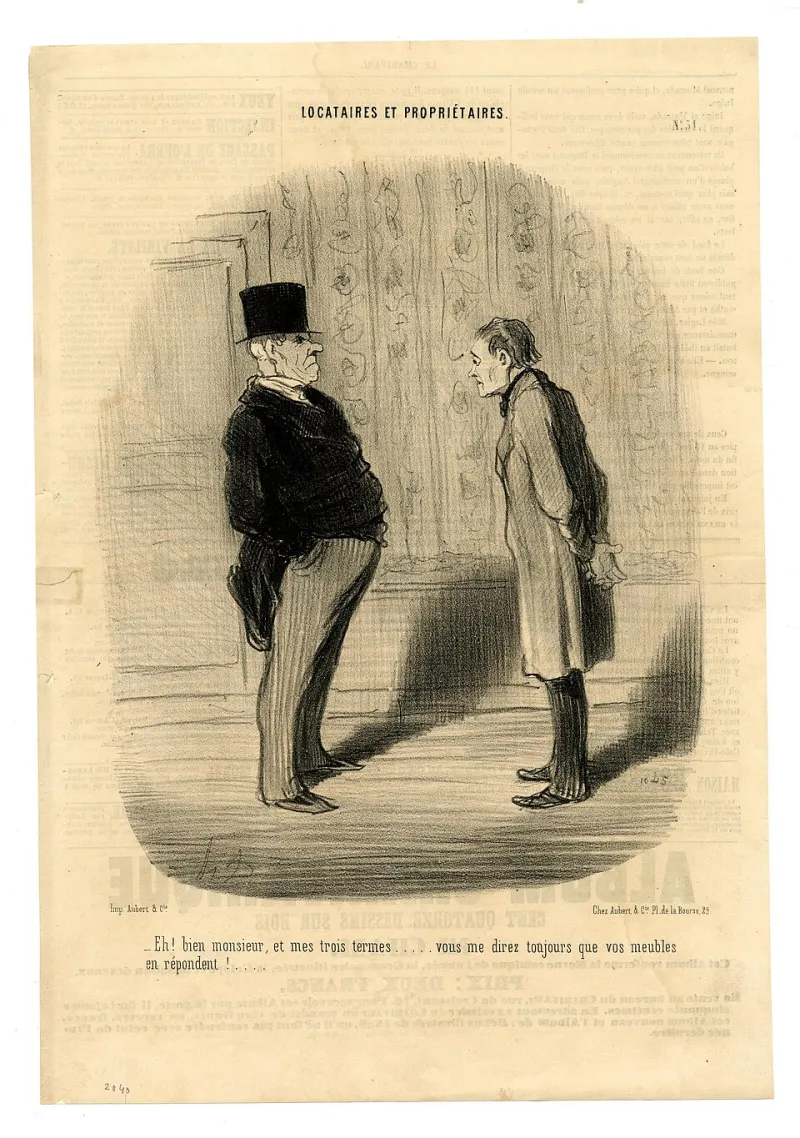
Photo: Print made by: Honoré Daumier Printed by: Aubert & Cie Published by: Aubert, Public domain, via Wikimedia Commons
A tenancy that outlives the tenant
When a tenant dies, the first instinct of everyone involved — landlord, family, letting agent — is to treat the tenancy as finished. Legally, it is not. A tenancy is a species of property interest, and on death it forms part of the tenant's estate. Rent continues to accrue. The obligations under the tenancy agreement continue to bind the estate until the tenancy is properly brought to an end. The tenancy does not lapse, and it does not pass automatically to the next of kin in their personal capacity.
Understanding that single point prevents most of the difficulties that follow. A well-intentioned son who clears the flat and hands back the keys may believe he is doing the landlord a favour. He may in fact be creating a liability, and he is almost certainly not the person entitled to end the tenancy.
Who can actually end the tenancy
Where the tenancy was held in the sole name of the deceased, the power to surrender or serve notice rests with the personal representatives — the executors named in a will, or the administrators appointed where there is none. Until a grant of probate or letters of administration is issued, that authority is in suspense. This is the practical bottleneck in almost every case, and it is worth saying plainly: the grant can take weeks or months, and the tenancy will still be running throughout.
Two qualifications matter. First, where the tenancy was held jointly by the deceased and another tenant, the tenancy passes to the surviving joint tenant automatically. The survivor remains liable for the rent and the property does not form part of the estate at all. Second, some social tenancies carry statutory rights of succession for a spouse, civil partner or qualifying family member. Those rights are specific, limited and time-sensitive, and a family facing this situation should take advice before giving up possession of anything.
Landlords should be cautious about informal arrangements. Accepting rent from a bereaved relative, corresponding with them as though they were the tenant, or allowing them to sign a fresh tenancy can all change the legal position, sometimes irrevocably. It is better to say that you are waiting for the grant than to improvise.
Rent, arrears and the debts of the estate
Rent falling due after death is a debt of the estate, payable from its assets. Arrears accrued before death rank alongside other unsecured debts. In practice, executors will often agree an early surrender to stop the meter running, and a landlord may reasonably accept one — but it should be documented in writing, signed by the personal representatives once appointed, with a clear end date and a record of the condition of the property.
Where there are no personal representatives and the property is standing empty, the landlord's position is awkward. Possession proceedings generally require a defendant, and notice must be validly given. In rare cases a creditor may apply for a grant, but that is a step to discuss with a solicitor rather than to attempt alone. Council tax also needs attention: liability rests with the estate, and there may be an exemption or discount while the property is unoccupied pending probate. The local authority should be told promptly, since the relief is not applied automatically.
The deposit
The deposit remains subject to the same statutory protection scheme as before. It is held for the tenancy, not for the family, and it is repayable to the estate — normally to the personal representatives, on production of the grant and proof of identity. Deductions must be evidenced in the usual way, with check-in and check-out reports, invoices and photographs.
Two practical points are worth flagging. First, a deposit cannot lawfully be used to offset sentimental value or to fund a clean-out beyond the terms of the tenancy. Second, if the deposit was never protected in an approved scheme, or the prescribed information was never served, the landlord may face a claim for its return plus the statutory penalty, and it is far better to address that early than to have it raised as a counterclaim.
Access, belongings and the unlawful eviction trap
This is where well-meaning people get into serious trouble. A landlord has no right to change the locks, clear the property or remove possessions because the tenant has died. Doing so risks a claim for unlawful eviction under the Protection from Eviction Act 1977, and separate claims in respect of the goods. The fact that the tenant is dead does not extinguish the protection; it transfers it to the estate.
Equally, a relative cannot authorise a landlord to dispose of items unless they have the authority to do so. The correct approach is agreement, recorded in writing, with an inventory.
A workable sequence looks like this:
- Secure the property. The landlord may take reasonable steps to make the property safe — turning off utilities, securing a broken window, dealing with a leak. Inform the family of what has been done and why.
- Agree access. Let the family or their representative into the property on agreed dates, accompanied if they prefer, with photographs taken at the outset.
- Inventory the contents. List everything of apparent value and everything of apparent sentiment, and photograph both. Sentimental value is not a legal category, but it is where most disputes begin.
- Store or remove by agreement. Where items are to be kept, agree who is taking them, when, on what receipt, and who bears the cost of storage if the property must be cleared before probate.
- Confirm in writing. An email recording what was agreed, signed receipts for goods, and a schedule of condition will resolve almost any later disagreement.
Where the disputes come from
The difficult cases are rarely about money. They involve a partner with no legal status who lived in the property, a family divided over a watch or a photograph album, or a landlord who cleared a flat in week two and now faces an allegation of harassment. In each case the legal analysis is straightforward; the damage is done by acting before it is applied.
Our advice to landlords is to accept a short period of rent-free uncertainty in exchange for a documented, lawful exit. Our advice to families is to obtain the grant as quickly as the process allows, to keep everything until authority is clear, and to put every agreement in writing. A tenancy that ends badly can be litigated for years. One that ends considerately rarely needs a courtroom at all.